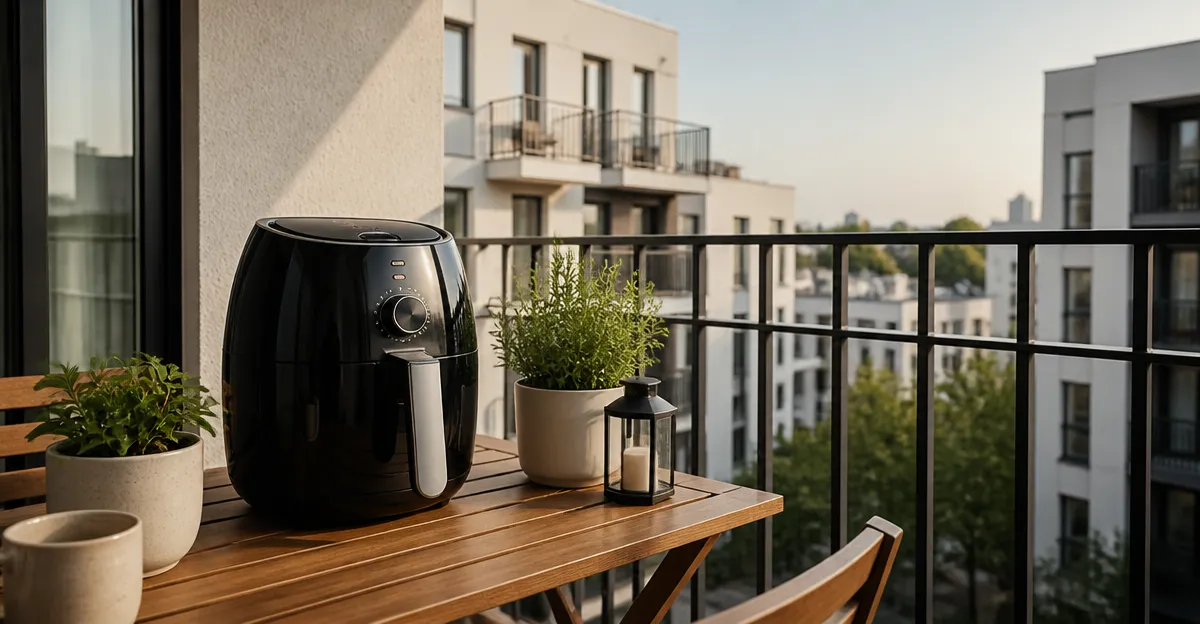
Air Fryer on Apartment Balcony? Tenant Safety & Code Guide
Introduction
Tenants frequently wonder whether a countertop air fryer can be operated on a balcony without violating building policies. This guide explains the regulatory framework, safety considerations, and landlord expectations that govern such usage. Readers will learn how to assess balcony suitability, interpret fire codes, and select an appliance that minimizes risk. By the end of the article, one will be equipped to make an informed decision that protects both personal property and community safety.
Background and Context
Air fryers are essentially compact convection ovens that rely on high‑temperature circulating air to achieve a crisp exterior. Because they generate heat comparable to traditional ovens, they fall under the same fire safety regulations that apply to cooking appliances. In many jurisdictions, fire codes distinguish between indoor and outdoor cooking equipment, and balconies are often classified as semi‑outdoor spaces with specific ventilation requirements. Understanding these distinctions is essential before placing any heat‑producing device on a balcony.
Landlords commonly include clauses in lease agreements that restrict the use of open flames, grills, or high‑heat appliances on balconies. Such clauses aim to prevent fire spread, smoke nuisance, and damage to building structures. Tenants should review their lease language carefully and, when in doubt, request written clarification from property management.
Key Concepts for Safe Balcony Use
Fire Code Fundamentals
Local fire departments enforce codes that limit the maximum heat output of portable appliances in exterior spaces. Typically, an appliance must not exceed a certain wattage or temperature threshold without additional safeguards such as fire‑resistant mats. Compliance with the International Fire Code (IFC) or local amendments often requires that the appliance be placed on a non‑combustible surface and kept away from flammable materials.
Balcony Structural Considerations
Balconies differ in load‑bearing capacity, railing clearance, and exposure to wind. An air fryer that weighs more than 10 pounds may impose additional stress on older balcony structures. Moreover, wind can disperse hot air unevenly, potentially causing overheating of nearby objects. Tenants should verify that the balcony can support the appliance and that there is sufficient clearance from railings, plants, and furniture.
Landlord Policies and Lease Agreements
Most leases contain a clause that restricts the use of grills, open flames, or high‑heat cooking devices on balconies. Some landlords may allow low‑temperature appliances if the tenant obtains prior written permission. It is advisable to submit a formal request that outlines the specific model, safety features, and intended usage schedule. Documentation of compliance with fire codes can strengthen the request.
Choosing a Safe Air Fryer for Balcony Use
When selecting an air fryer for balcony deployment, one should prioritize models that incorporate advanced safety mechanisms, temperature controls, and durable construction. The Breville Smart Oven Air Fryer Pro exemplifies a high‑performance appliance that aligns with these criteria.
- Element iQ System with five independent quartz elements provides precise temperature regulation and eliminates cold spots.
- Super convection technology reduces cooking time by up to 30 percent, lowering overall heat exposure.
- Thirteen cooking functions include air fry, dehydrate, bake, and roast, allowing versatile use without additional appliances.
- Interior oven light enables visual monitoring without opening the door, reducing heat loss.
With a rating of 4.5 out of 5 stars based on 12,945 reviews, the Breville model demonstrates strong consumer confidence. Its price of $399.95 reflects the inclusion of premium safety features and robust build quality, making it a suitable candidate for careful balcony use.
Comparison and Selection Guide
| Feature | Breville Smart Oven Air Fryer Pro | Typical Compact Air Fryer |
|---|---|---|
| Power (Watts) | 1800 W | 1500 W |
| Temperature Range | 65°F – 480°F | 100°F – 400°F |
| Safety Sensors | PID temperature control, automatic shut‑off | Basic thermal cut‑off |
| Cooking Functions | 13 (including dehydrate and proof) | 3–5 (typically fry, bake, reheat) |
| Warranty | 2 years limited | 1 year limited |
The table illustrates why the Breville appliance offers superior safety and functionality for balcony environments. Tenants seeking a single device that can replace multiple cooking tools will benefit from its extensive feature set.
Best Practices & Tips
- Place the air fryer on a fire‑resistant mat that meets local code specifications.
- Maintain a minimum clearance of 12 inches from railings, curtains, and combustible objects.
- Operate the appliance during daylight hours to allow easy visual inspection of surrounding areas.
- Never leave the air fryer unattended while it is heating; set a timer and monitor progress.
- Clean the interior after each use to prevent grease buildup, which can become a fire hazard.
- Store the appliance in a protected area when not in use, preferably indoors, to shield it from wind and rain.
Frequently Asked Questions
1. Is it legal to use any air fryer on a balcony?
Legality depends on local fire codes and lease agreements. Some jurisdictions permit low‑temperature appliances, while others prohibit any cooking device on balconies.
2. What temperature is considered safe for balcony cooking?
Most fire codes recommend that portable appliances not exceed 400°F when used outdoors, unless the device includes certified safety features.
3. Do I need permission from my landlord?
Yes, written permission is advisable. Provide details about the appliance’s safety certifications and intended usage to facilitate approval.
4. Can I use a traditional deep‑fat fryer on a balcony?
No, deep‑fat fryers typically involve open oil heating above 350°F and are prohibited in most residential balcony settings due to high fire risk.
5. How often should I clean the air fryer when used outdoors?
Clean the interior and exterior after each session to remove oil residues that could ignite under high heat.
6. Are there any insurance implications?
Some renters insurance policies may exclude claims related to prohibited balcony appliances. Verify coverage before use.
7. What should I do if the appliance malfunctions?
Immediately disconnect the unit from power, allow it to cool, and contact the manufacturer’s support line. Do not attempt repairs on the balcony.
Conclusion
Using an air fryer on an apartment balcony is permissible only when tenants adhere to fire codes, respect landlord policies, and implement rigorous safety measures. Selecting a device with advanced temperature control, such as the Breville Smart Oven Air Fryer Pro, reduces risk and enhances cooking versatility. By following the best‑practice checklist and maintaining open communication with property management, tenants can enjoy the convenience of balcony cooking without compromising safety.
Products Featured in This Guide
Breville Smart Oven Air Fryer Pro
Price: $399.95
Rating: 4.5 out of 5 stars (12,945 reviews)
Why it is featured: The appliance offers precise temperature control, multiple cooking functions, and robust safety features that make it suitable for careful balcony use while complying with fire safety standards.