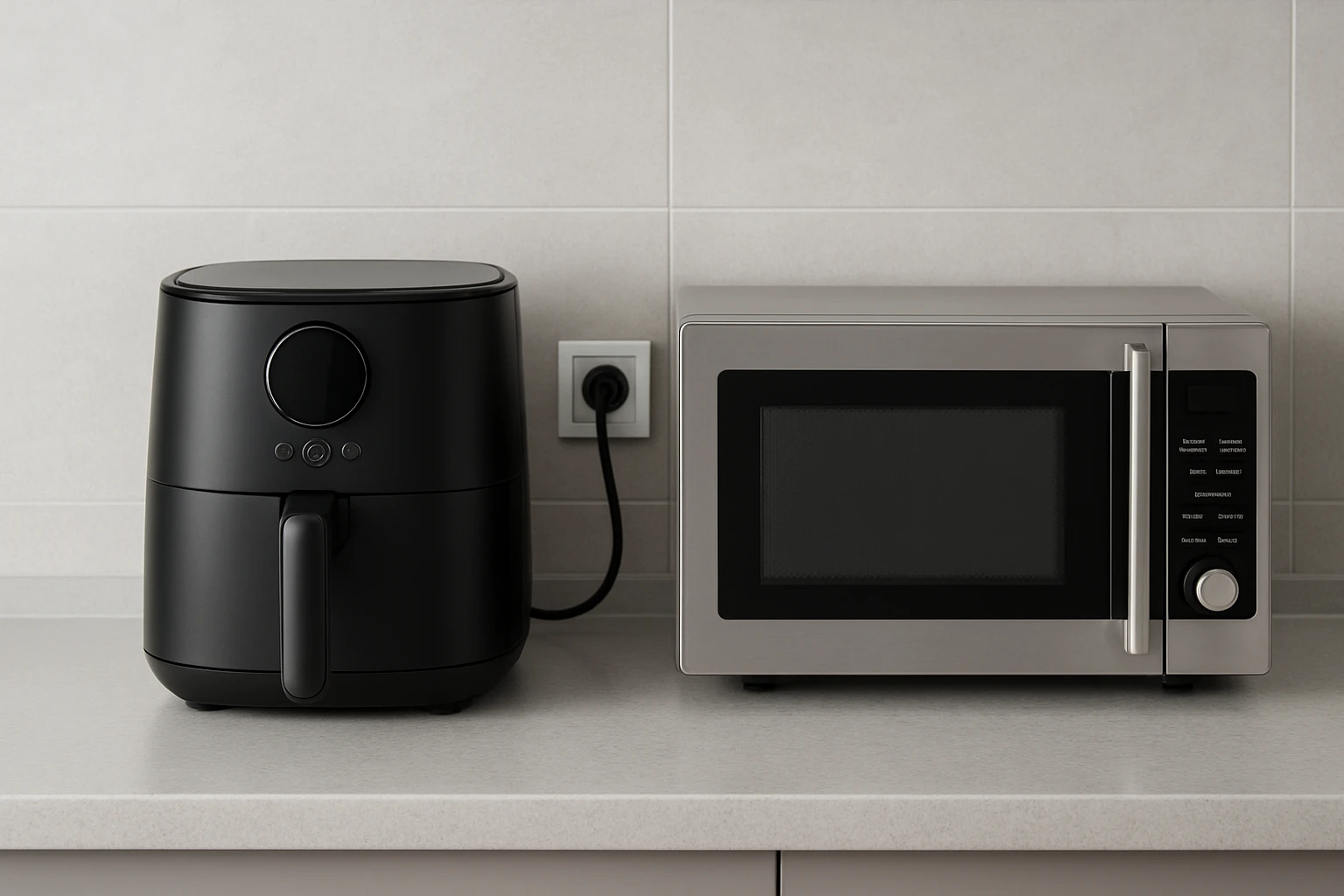
Run Air Fryer and Microwave on One Circuit? Safety Guide
Introduction
This guide explains whether a high‑capacity air fryer and a standard microwave can operate on the same electrical circuit in a typical apartment. Readers will learn the fundamentals of circuit capacity, how to calculate combined load, and what safety devices can protect against overload. The article also recommends three Amazon products that can improve safety and convenience when using multiple high‑power appliances. By the end of the guide, one will be able to assess one’s own wiring, avoid tripped breakers, and troubleshoot common problems.
Background and Context
Most apartment buildings supply 120‑volt circuits protected by a 15‑amp or 20‑amp breaker. A circuit’s ampere rating indicates the maximum continuous current it may safely carry. Exceeding this rating causes the breaker to trip, which protects the wiring from overheating and potential fire. Understanding the difference between continuous and intermittent loads is essential because appliances such as air fryers and microwaves draw significant power for extended periods.
Continuous load is defined as a load that operates for three hours or more without interruption. According to the National Electrical Code, continuous loads should not exceed 80 % of the breaker rating. For a 15‑amp breaker, the safe continuous load is 12 amps; for a 20‑amp breaker, it is 16 amps. Converting amperage to watts uses the formula Watts = Volts × Amps. At 120 V, a 12‑amp continuous load equals 1,440 W, while a 16‑amp load equals 1,920 W.
Modern air fryers often list a power consumption between 1,300 W and 1,800 W, while most microwaves range from 800 W to 1,200 W. When both appliances operate simultaneously, the combined wattage can easily surpass the safe continuous load of a 15‑amp circuit, leading to breaker trips. However, many apartments have multiple circuits distributed across kitchen outlets, allowing separate placement of each appliance.
Assessing Your Apartment Circuit
The first step is to identify which circuit supplies the kitchen outlets you intend to use. Turn off all breakers, then restore power to the kitchen breaker only. Plug a simple load such as a lamp into each outlet; if the lamp works, the outlet shares the same circuit. Alternatively, use a circuit‑tester or a plug‑in amp meter to read real‑time current draw.
Once the circuit is identified, calculate the total load of the appliances you plan to run together. For example, the Ninja XL Air Fryer is rated at 1,750 W and draws approximately 14.6 amps at 120 V. A typical 1,000 W microwave draws about 8.3 amps. Adding these values yields 22.9 amps, which exceeds the capacity of a standard 15‑amp breaker and even a 20‑amp breaker when considered as a continuous load.
If the combined load exceeds the circuit rating, the solution is to stagger usage, relocate one appliance to a different circuit, or upgrade the circuit if permitted by the landlord and local code. Staggering means operating the air fryer first, then allowing the breaker to reset before using the microwave.
Product Recommendations for Safe Operation
Three products can help manage load, protect against overload, and provide convenient power distribution. Each product is linked to its Amazon listing and includes key specifications, price, and user rating.
1. Ninja XL Air Fryer
- Power: 1,750 W (approximately 14.6 A at 120 V)
- Capacity: 6.5 qt, suitable for family‑size meals
- Six cooking functions including Max Crisp, Air Fry, Roast, Bake, Reheat, and Dehydrate
- Non‑stick basket and crisper plate are dishwasher‑safe
- Rating: 4.7 / 5.0 from 97,115 reviews
- Price: $119.99
This air fryer is highlighted because its high wattage makes it a primary factor in circuit calculations. Its versatile functions reduce the need for multiple appliances, thereby limiting overall load when used wisely.
2. Siemens 15 Amp Duplex Breaker
- Type: QT‑style duplex breaker, provides two 15‑amp single‑pole circuits in the space of one standard breaker
- Space‑saving design reduces panel crowding
- Manual on/off toggle for easy testing
- Rating: 4.7 / 5.0 from 907 reviews
- Price: $16.20
The duplex breaker allows you to split a single panel space into two independent circuits, which can separate the air fryer from the microwave. Installing this device requires compliance with local electrical codes and may need landlord approval.
3. Mifaso Surge Protector Power Strip
- Six AC outlets with 900‑joule surge protection
- Four USB ports (5 V / 2.4 A each) with smart charging
- 15‑amp circuit breaker and overload indicator
- 5‑foot heavy‑duty braided cord with right‑angle plug
- Rating: 4.8 / 5.0 from 19,805 reviews
- Price: $26.59
This power strip provides surge protection and a built‑in circuit breaker that can act as a secondary safeguard when multiple devices share a circuit. The USB ports also free up AC outlets for low‑power accessories.
Comparison and Selection Guide
When choosing accessories to support simultaneous appliance use, consider three criteria: load capacity, safety features, and physical footprint.
| Feature | Ninja XL Air Fryer | Siemens Duplex Breaker | Mifaso Surge Protector |
|---|---|---|---|
| Primary Function | High‑power cooking appliance | Circuit splitting for panel | Power distribution with surge protection |
| Maximum Current | 14.6 A | 15 A per pole (two circuits) | 15 A with overload shutdown |
| Safety Mechanism | Overheat sensor, non‑stick coating | Manual reset, thermal‑magnetic trip | Integrated circuit breaker, surge suppression |
| Price | $119.99 | $16.20 | $26.59 |
| User Rating | 4.7/5 | 4.7/5 | 4.8/5 |
If the primary concern is separating loads, the Siemens duplex breaker offers the most direct solution by providing two dedicated 15‑amp circuits. For users who cannot modify panel wiring, the Mifaso surge protector adds a layer of overload protection and convenient USB charging. The Ninja air fryer remains the central appliance whose power draw dictates most of the load calculations.
Best Practices and Tips
- Always verify the amperage rating on the appliance nameplate before connecting it to a circuit.
- Use a plug‑in amp meter to measure real‑time draw when both appliances are operating.
- Prefer separate outlets on different circuits; kitchen countertop outlets are often split between two breakers.
- Do not use extension cords or power strips as a permanent solution for high‑power appliances; they add resistance and can overheat.
- If a breaker trips repeatedly, reduce the load, check for damaged wiring, or consult a licensed electrician.
- When installing a duplex breaker, ensure the panel is compatible with QT‑type breakers and that the replacement does not void the manufacturer warranty.
- Maintain clear space around the air fryer and microwave to allow proper ventilation and prevent heat buildup.
Frequently Asked Questions
- Can I run a 1,500 W air fryer and a 1,000 W microwave on a 15‑amp circuit? No. The combined load would be 2,500 W, which equals about 20.8 amps and exceeds the 15‑amp rating. The breaker will trip.
- What is the difference between a continuous and intermittent load? A continuous load operates for three hours or more without interruption and must stay below 80 % of the breaker rating. An intermittent load runs for shorter periods and may approach the full rating.
- Is a surge protector sufficient to prevent a breaker trip? A surge protector can protect against voltage spikes, but it does not increase the circuit’s amperage capacity. It may shut off if overload is detected, but the underlying issue remains.
- Can I replace a single‑pole breaker with a duplex breaker myself? Only if you are a qualified electrician or have explicit permission from the landlord. Improper installation can create fire hazards and violate local codes.
- What should I do if the kitchen outlet feels warm while using both appliances? Stop using the appliances immediately, unplug them, and contact an electrician. Warm outlets indicate excessive current flow and potential wiring problems.
- Are there low‑power air fryers that are safer for shared circuits? Yes. Some compact models consume 900 W to 1,200 W, which reduces the risk of overload when paired with a microwave.
- How often should I test my circuit breaker? Test the breaker annually by resetting it and verifying that it holds under normal load. Replace any breaker that trips without cause.
Conclusion
Running an air fryer and a microwave on the same circuit is possible only when the combined load stays within the circuit’s safe amperage limit. By calculating wattage, using load‑splitting devices such as the Siemens 15 Amp Duplex Breaker, and employing protective accessories like the Mifaso Surge Protector Power Strip, residents can avoid frequent breaker trips and maintain electrical safety. Always respect local codes, obtain landlord approval when modifying panels, and prioritize proper ventilation for high‑heat appliances.
Products Featured in This Guide
Ninja XL Air Fryer
Price: $119.99 – Rating: 4.7/5 (97,115 reviews)
Featured because its high wattage is central to circuit‑capacity calculations and it offers versatile cooking functions that reduce the need for additional appliances.
Siemens 15 Amp Duplex Breaker
Price: $16.20 – Rating: 4.7/5 (907 reviews)
Featured because it allows a single panel space to provide two independent 15‑amp circuits, enabling safe separation of high‑power appliances.
Mifaso Surge Protector Power Strip
Price: $26.59 – Rating: 4.8/5 (19,805 reviews)
Featured because it provides surge protection, a built‑in overload breaker, and USB charging, adding an extra layer of safety when multiple devices share a circuit.