Introduction
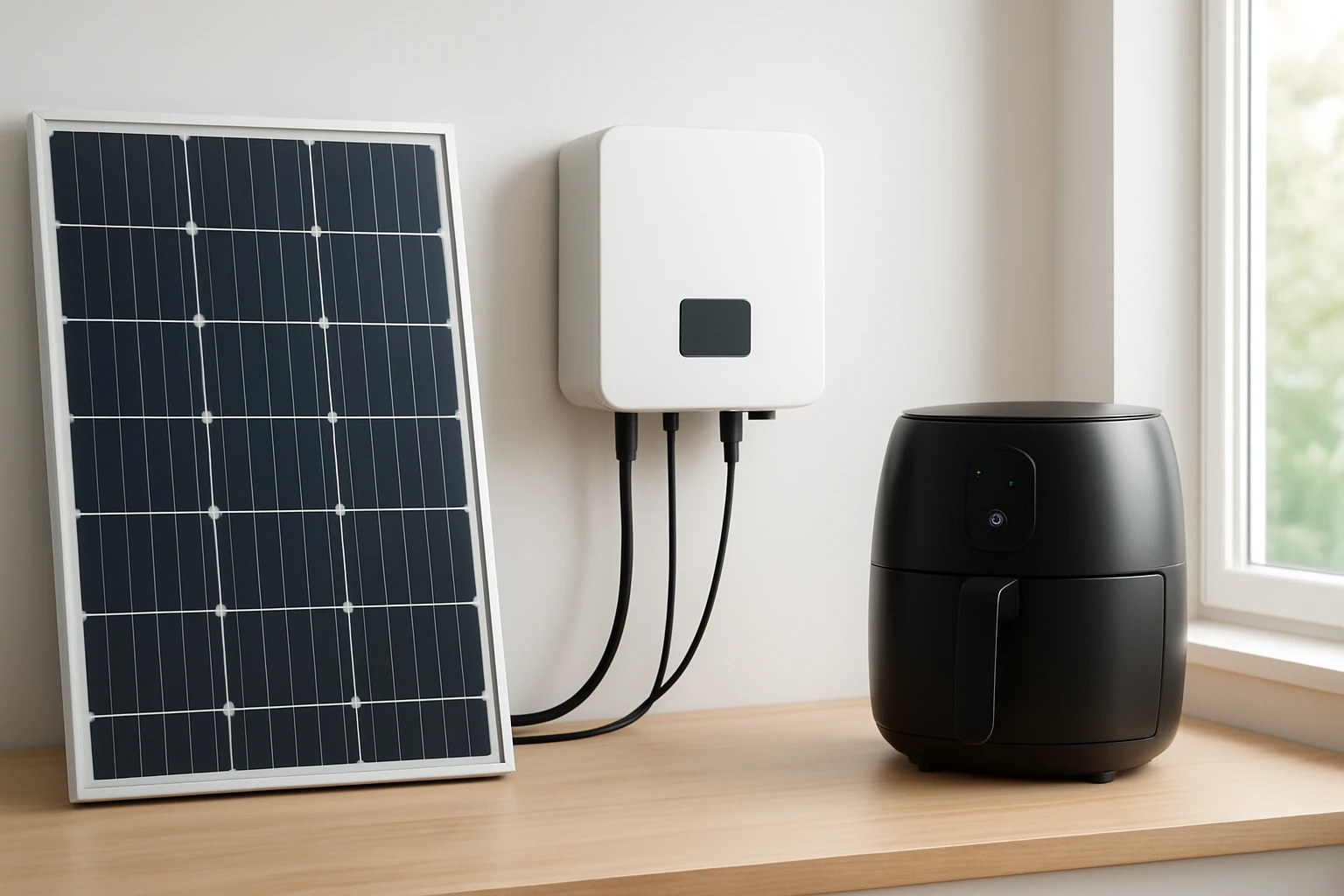
One of the most common desires of tiny‑home owners is to enjoy modern kitchen appliances without sacrificing off‑grid independence. An air fryer provides quick, healthy meals, yet it draws a significant amount of power that can strain a modest solar system. This guide explains how to calculate the required inverter capacity, select appropriate solar panels, and wire the system safely so that an air fryer operates reliably. Readers will learn the underlying electrical principles, practical installation steps, and best‑practice tips that protect both equipment and battery life.
The information presented is applicable to any off‑grid dwelling, whether it is a converted van, a small cabin, or a purpose‑built tiny house. By following the procedures, one can enjoy the convenience of an air fryer while maintaining the sustainability goals that motivated the tiny‑home lifestyle.
What You’ll Need
- LANDERPOW 3000W Inverter – 3000 W continuous, 6000 W surge, pure sine wave output.
- SOLPERK 20W Solar Panel Kit – Monocrystalline panel with MPPT charge controller.
- Deep‑cycle 12 V battery bank sized for at least 2 hours of air‑fryer operation (e.g., 200 Ah).
- Appropriate gauge battery cables (1 AWG copper recommended for high‑current inverter).
- Fuse block, circuit breakers, and a multimeter for safety checks.
- Mounting hardware for panels and a secure location for the inverter.
Step 1: Determine the Air Fryer’s Power Demand
The first task is to identify the air fryer’s wattage rating, which is usually printed on the appliance label or listed in the user manual. A typical 1500 W air fryer draws 1500 W at full power, but many models have a lower standby draw of around 10 W. One should also account for startup surge, which can be 1.5 to 2 times the running wattage because the heating element and fan engage simultaneously.
For example, a 1500 W air fryer may require a peak of 2250 W for a few seconds. This figure is essential when selecting an inverter, because the inverter must handle the surge without tripping.
Calculate the daily energy consumption by estimating the average cooking time. If the air fryer is used for 30 minutes per day at 1500 W, the energy use equals 0.75 kWh (1500 W × 0.5 h). This value guides the battery capacity needed to sustain operation during periods without sunlight.
Step 2: Choose an Inverter That Meets Continuous and Surge Requirements
One of the most reliable options is the LANDERPOW 3000W Inverter. It provides 3000 W continuous power and a 6000 W surge rating, which comfortably exceeds the air fryer’s peak demand. The device delivers a pure sine wave output, meaning the waveform matches utility‑grid quality and protects sensitive electronics from distortion.
Key features include three AC outlets, a 30 W USB‑C PD port, and a hard‑wire terminal for high‑current tools. The inverter also ships with two 1 AWG copper battery cables, reducing voltage drop during heavy loads. At a price of $209.99 and a rating of 4.5 / 5 from 135 reviews, it offers strong value for a tiny‑home power system.
Alternative choices include the BELTTT 3000W Inverter (price $249.99, rating 4.6 / 5) and the Renogy 1000W Inverter (price $175.99, rating 4.4 / 5). The BELTTT model adds a high‑brightness LCD and a 23‑ft remote control cable, while the Renogy unit is lighter and includes a built‑in USB port. For an air fryer that draws 1500 W, the 1000 W Renogy inverter would be insufficient for continuous operation, so the 3000 W options are preferred.
Step 3: Size the Solar Array to Recharge the Battery Bank
To replenish the energy used by the air fryer, the solar array must generate at least the daily consumption plus system losses. Assuming 0.75 kWh per day and a 20 % loss factor for conversion and wiring, the required generation is approximately 0.9 kWh.
The SOLPERK 20W Solar Panel Kit produces up to 20 W under optimal sunlight. In a location receiving an average of 5 peak sun hours per day, a single panel yields 100 Wh (20 W × 5 h). Therefore, nine panels would be needed to meet the 0.9 kWh target. Tiny‑home owners often install multiple panels on a roof or portable frame, using the kit’s adjustable 360° mounting bracket for optimal orientation.
The kit includes an 8 A MPPT charge controller, which maximizes power extraction and protects the battery from over‑charging. At a price of $30.84 and a rating of 4.5 / 5 from 3,758 reviews, it is an economical way to expand the solar array as budget permits.
Step 4: Connect the Inverter to the Battery Bank
Begin by placing the deep‑cycle battery bank in a well‑ventilated, level area close to the inverter. Use the 1 AWG copper cables supplied with the LANDERPOW inverter to connect the positive and negative battery terminals to the inverter’s input terminals. Ensure the connections are tight and that the cable insulation is not damaged.
Install a fuse block or circuit breaker between the battery and inverter to protect against short circuits. A 200 A fuse is appropriate for a 3000 W inverter operating at 12 V (3000 W ÷ 12 V = 250 A peak, but the inverter’s internal protection limits surge to 6000 W).
After wiring, use a multimeter to verify that the battery voltage is within the inverter’s operating range (typically 10.5 V to 15 V). The inverter’s smart LED remote control can display real‑time voltage, current, and error codes, simplifying the verification process.
Step 5: Wire the Solar Panels to the Charge Controller
Connect the solar panel strings to the MPPT charge controller using the provided MC4 connectors. The controller’s input voltage range accommodates the combined voltage of multiple 20 W panels; for nine panels in series, the voltage will be roughly 90 V, well within the controller’s 60 V–500 V capability.
Set the charge controller’s battery type to match the deep‑cycle battery chemistry (e.g., AGM, LiFePO₄). The controller’s three‑stage charging algorithm will automatically transition from bulk to absorption to float, preventing over‑charging and extending battery life.
Run the controller’s output cables to the battery bank, observing correct polarity. Secure all connections with appropriate terminals and zip ties to avoid accidental disconnection during travel.
Step 6: Test the System and Run the Air Fryer
With the solar array generating power and the battery fully charged, turn on the inverter using the remote control or the front power button. Verify that the AC outlets display the correct voltage (120 V). Plug the air fryer into one of the inverter’s AC outlets and start a short cooking cycle to confirm stable operation.
Monitor the inverter’s LED display for any warnings such as overload or low‑voltage alerts. If the inverter indicates a voltage drop, reduce the load or increase the battery bank capacity. Record the battery’s state‑of‑charge after each use to refine future usage estimates.
Once the system passes the initial test, one can schedule regular maintenance checks, such as cleaning the solar panels and inspecting cable connections, to ensure long‑term reliability.
Tips & Pro Tips
- Always size the battery bank for at least twice the daily energy consumption of the air fryer; this provides a buffer for cloudy days.
- Use a solar tracker or adjust the panel tilt seasonally to maximize sun exposure and reduce the number of panels required.
- Consider adding a second inverter with a lower power rating for everyday low‑power devices; this preserves the high‑capacity inverter for occasional heavy loads like the air fryer.
- When installing the inverter in a tiny home, mount it on a vibration‑isolated platform to protect internal components during travel.
- Utilize the remote control’s one‑touch shutdown feature to quickly disconnect the inverter during emergencies or when the battery reaches a critical low state.
Troubleshooting
Problem: Inverter shuts down during air‑fryer operation.
Solution: Verify that the battery bank can deliver the required surge current. If the voltage dips below the inverter’s low‑voltage threshold, add parallel batteries or reduce the load.
Problem: Solar panels produce less than expected power.
Solution: Check for shading, dirty panel surfaces, or loose MC4 connectors. Re‑orient the panels to face true south (in the northern hemisphere) and ensure the MPPT controller is set to the correct battery type.
Problem: Remote control displays an error code.
Solution: Consult the inverter’s user manual; most error codes indicate over‑temperature, overload, or reverse polarity. Allow the inverter to cool, reduce the load, or correct wiring as needed.
Conclusion
One can successfully power an air fryer in a tiny home by carefully calculating energy needs, selecting a robust pure sine wave inverter, and installing a suitably sized solar array with an efficient MPPT charge controller. The steps outlined provide a clear pathway from concept to functional off‑grid kitchen, while the product recommendations offer reliable tools that simplify the process. By following best‑practice wiring and maintenance guidelines, tiny‑home owners will enjoy the convenience of modern cooking without compromising their sustainable lifestyle.
Products Mentioned in This Guide
Frequently Asked Questions
What inverter size is needed to run an air fryer on solar power?
A pure‑sine inverter rated for at least 1500 W continuous (with a higher surge rating, e.g., 3000 W) safely handles most 1500‑W air fryers.
How many solar panels are required to support an air fryer?
Typically 2–3 kW of solar panels (e.g., three 300‑W panels) provide enough energy for a 30‑minute air‑fryer session while preserving reserve power.
Can a pure sine wave inverter protect the air fryer and batteries?
Yes, a pure sine wave inverter delivers clean power, preventing heat buildup in the fryer and reducing stress on the battery bank.
What wiring considerations ensure safe operation of an air fryer off‑grid?
Use appropriately sized gauge wire for the inverter’s current, include a DC fuse close to the battery, and keep connections tight to avoid voltage drop.
How does using an air fryer affect battery life in a tiny home?
High‑draw appliances like air fryers quickly deplete batteries, so size the battery bank for at least 2‑3 hours of reserve capacity to avoid deep discharge.