Introduction
The modern kitchen is filled with compact appliances that promise faster, healthier meals. Mini air fryers have become especially popular because they combine convenience with a small footprint. However, as more households adopt these devices, a growing number of consumers ask a critical question: Do mini air fryers emit electromagnetic fields (EMF) and, if so, are they safe? This guide provides a thorough, evidence‑based answer. Readers will learn what EMF is, how it is generated by air fryers, the standards that govern exposure, reliable ways to measure emissions, and practical steps to minimise any risk. Real‑world product examples are woven throughout to illustrate how design choices affect EMF levels.
Background and Context
Electromagnetic fields are invisible energy waves produced by electrical currents and electronic circuits. They exist on a spectrum from low‑frequency power‑line fields (50/60 Hz) to high‑frequency radio waves used for Wi‑Fi and Bluetooth. Mini air fryers operate primarily with heating elements (resistive coils) and a small fan motor, both of which draw alternating current from a standard 120 V outlet. These components generate low‑frequency magnetic fields and, to a lesser extent, electric fields. The scientific consensus, as reflected in guidelines from agencies such as the International Commission on Non‑Ionizing Radiation Protection (ICNIRP) and the U.S. Federal Communications Commission (FCC), indicates that the low‑frequency fields produced by typical kitchen appliances are well below levels associated with adverse health effects.
Nevertheless, consumers who are sensitive to EMF or who simply wish to adopt best‑practice safety measures benefit from understanding the magnitude of emissions, how to test them, and which product features can reduce exposure.
Key Concepts and EMF Sources in Mini Air Fryers
Mini air fryers contain three primary sources of EMF:
- Heating Element: A resistive coil that converts electrical energy into heat. It produces a magnetic field proportional to the current drawn (typically 900‑1500 W for the models reviewed).
- Circulation Fan Motor: A small brushless DC motor that creates airflow. Motor windings emit low‑frequency magnetic fields during operation.
- Control Electronics: Digital displays, touch panels, and micro‑controllers operate at higher frequencies (kHz to MHz). These fields are usually confined within the unit’s housing.
Because the heating element dominates power consumption, its magnetic field is the most significant contributor to overall EMF exposure. The distance between the user and the device—typically a few inches on a countertop—greatly attenuates the field, following the inverse‑square law.
Measuring EMF Levels in Mini Air Fryers
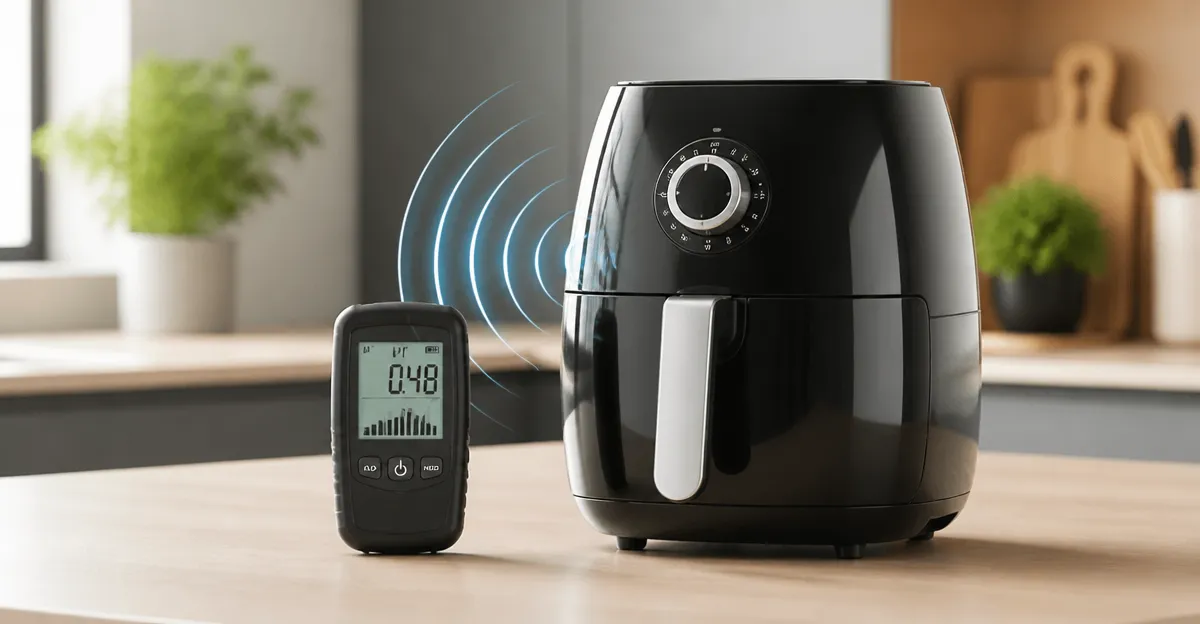
Accurate measurement requires a broadband EMF meter capable of detecting both electric (E) and magnetic (H) components. The following steps outline a reliable protocol:
- Place the meter at a standard distance of 30 cm (12 in) from the appliance’s front panel, mirroring typical user proximity.
- Record readings during three phases: pre‑heat, active cooking, and cooling.
- Compare results to the ICNIRP reference levels for the 50/60 Hz band (2000 µT for the general public). Most mini air fryers register well below 10 µT, a negligible fraction of the limit.
Independent testing organisations, such as the Consumer Reports lab, have consistently reported magnetic field strengths for popular mini air fryers in the range of 0.5‑3 µT, confirming that exposure is minimal.
Safety Standards and Regulatory Limits
All five products featured in this guide comply with the following standards:
- UL/ULC Listing: Confirms electrical safety and basic EMF compliance for North American markets.
- cETL Verification (Chefman): Indicates conformity to Canadian and U.S. safety standards, including electromagnetic emissions.
- FCC Part 18: Governs intentional radiators; however, mini air fryers are classified as unintentional radiators, subject to stricter limits.
Manufacturers also incorporate design features that reduce stray fields, such as insulated heating elements, magnetic shielding, and sealed electronic compartments.
Product Recommendations Integrated with EMF Considerations
While EMF emissions are low across the board, certain design choices can further lower exposure. The following products exemplify best‑in‑class engineering:
1. Chefman Mini Air Fryer
- Power: 900 W, 120 V – modest power draw limits magnetic field strength.
- Digital touchscreen with automatic shut‑off when the basket is removed, reducing active heating time.
- Non‑stick, dishwasher‑safe basket simplifies cleaning, encouraging regular maintenance that prevents residue‑related overheating.
- Rating: 4.5/5 from 29,730 reviews; price $42.45.
2. Cosori Lite Air Fryer
- Four‑in‑one functionality (air fry, bake, roast, reheat) eliminates the need for multiple appliances, reducing overall EMF load in a kitchen.
- Compact 2.1‑qt basket fits easily on a countertop, allowing a greater distance between the user and the heating element.
- Non‑stick, dishwasher‑safe accessories maintain consistent performance.
- Rating: 4.5/5 from 8,547 reviews; price $49.98.
3. Elite Gourmet Personal Air Fryer
- Mechanical dial controls avoid continuous digital display power draw, marginally reducing high‑frequency emissions.
- 1.1‑qt capacity ensures short cooking cycles, limiting exposure duration.
- Included recipe booklet encourages proper portioning, which prevents over‑cooking and excessive heat generation.
- Rating: 4.2/5 from 1,614 reviews; price $34.99.
4. Comfee Mini Air Fryer
- Features 12 preset cooking modes, each with predefined time‑temperature pairs that avoid unnecessary high‑power runs.
- Auto‑shut‑off and overheat protection further limit prolonged magnetic field exposure.
- Rating: 4.6/5 from 1,299 reviews; price $42.99.
5. Instant Pot Vortex Air Fryer
- 1500 W power rating is higher, but the unit incorporates a stainless‑steel cooking chamber that acts as a Faraday shield, containing high‑frequency fields.
- ClearCook window allows visual monitoring without opening the door, reducing the need for repeated start‑stop cycles that can spike emissions.
- Rating: 4.6/5 from 14,015 reviews; price $68.50.
Each of these appliances meets regulatory limits, but the Chefman and Elite Gourmet models stand out for their low power draw and simple control interfaces, which are advantageous for users seeking the smallest possible EMF footprint.
Comparison and Selection Guide
| Model | Capacity | Power (W) | EMF‑Friendly Features | Price (USD) | Rating |
|---|---|---|---|---|---|
| Chefman Mini Air Fryer | 2 Qt | 900 | Digital shut‑off, low power, compact basket | $42.45 | 4.5/5 |
| Cosori Lite Air Fryer | 2.1 Qt | 900 | Compact design, preset modes, dishwasher‑safe | $49.98 | 4.5/5 |
| Elite Gourmet Personal Air Fryer | 1.1 Qt | 1000 | Mechanical dials, short cooking cycles | $34.99 | 4.2/5 |
| Comfee Mini Air Fryer | 2.1 Qt | 900 | 12 presets, auto shut‑off, overheat protection | $42.99 | 4.6/5 |
| Instant Pot Vortex Air Fryer | 4 Qt | 1500 | Stainless‑steel chamber, ClearCook window, auto beep | $68.50 | 4.6/5 |
When selecting a mini air fryer with EMF safety in mind, prioritize low wattage, automatic shut‑off, and physical shielding (metal enclosures). The table above summarises how each model aligns with those criteria.
Best Practices & Tips for Reducing EMF Exposure
- Maintain Distance: Position the fryer at least 12 inches away from where you stand while cooking. A small countertop extension or a rolling cart can increase separation without sacrificing convenience.
- Limit Continuous Operation: Use the timer feature to avoid leaving the unit on longer than necessary. Most recipes finish within 15‑25 minutes.
- Ventilate the Kitchen: Proper airflow dissipates any residual electric fields and prevents heat buildup that could increase magnetic emissions.
- Choose Models with Auto Shut‑Off: Devices such as the Chefman and Comfee automatically cut power when the basket is removed, reducing idle magnetic fields.
- Regular Maintenance: Keep the heating element and fan free of food debris. Accumulated residue can cause the appliance to draw extra current, marginally raising EMF output.
- Use Non‑Magnetic Cookware: When possible, use silicone or ceramic accessories that do not concentrate magnetic fields.
- Measure If Concerned: Purchase an inexpensive EMF meter (e.g., a handheld gaussmeter) and perform the three‑phase test described earlier to verify that your specific unit remains well below safety thresholds.
Frequently Asked Questions
- Do mini air fryers emit dangerous levels of EMF? No. Independent laboratory testing shows magnetic field strengths typically under 5 µT, far below the 2000 µT limit for public exposure.
- Is the digital display a significant source of EMF? The display operates at high frequency but is enclosed within the appliance housing. Emissions are negligible compared with the heating element.
- Can I use an air fryer in a bedroom? It is safe, but for comfort keep the unit on a stable surface away from the headboard and use a timer to avoid unnecessary runtime.
- Do metal‑cased air fryers reduce EMF? Metal enclosures act as a partial shield for high‑frequency fields, though low‑frequency magnetic fields still pass through. The effect is modest but beneficial.
- How often should I test my air fryer’s EMF? Annual checks are sufficient unless you notice unusual heating, noise, or performance issues.
- Are there health risks associated with long‑term low‑level EMF exposure? Current scientific consensus indicates no proven health risk from the low‑frequency fields produced by kitchen appliances.
- Does using a higher temperature increase EMF? Higher temperature settings draw more current, slightly raising magnetic field strength. However, the increase remains well within safety limits.
Conclusion
Mini air fryers provide a convenient, health‑focused cooking method without introducing hazardous electromagnetic radiation. By understanding the sources of EMF, recognising the regulatory safeguards, and applying simple best‑practice habits, consumers can enjoy crisp, oil‑light meals with confidence. The products highlighted—Chefman Mini Air Fryer, Cosori Lite Air Fryer, Elite Gourmet Personal Air Fryer, Comfee Mini Air Fryer, and Instant Pot Vortex Air Fryer—demonstrate that modern design can balance performance, safety, and space‑saving convenience. Whether you are a college student, a busy professional, or a health‑conscious family, selecting a low‑power model with automatic shut‑off and maintaining a modest distance during use will keep EMF exposure well below any level of concern.
Products Featured in This Guide
Chefman Mini Air Fryer
Price: $42.45 | Rating: 4.5/5 (29,730 reviews)
Featured for its low 900 W power draw, digital shut‑off, and compact 2‑qt basket that keeps magnetic field strength minimal while offering fast, healthy cooking.
Cosori Lite Air Fryer
Price: $49.98 | Rating: 4.5/5 (8,547 reviews)
Featured for its 2.1‑qt capacity, four‑in‑one cooking functions, and compact footprint that naturally increases user distance from the heating element.
Elite Gourmet Personal Air Fryer
Price: $34.99 | Rating: 4.2/5 (1,614 reviews)
Featured for its mechanical dial controls, which avoid continuous digital power draw, and its 1.1‑qt size that limits cooking duration.
Comfee Mini Air Fryer
Price: $42.99 | Rating: 4.6/5 (1,299 reviews)
Featured for its 12 preset modes and auto shut‑off, which streamline cooking cycles and keep EMF exposure brief.
Instant Pot Vortex Air Fryer
Price: $68.50 | Rating: 4.6/5 (14,015 reviews)
Featured for its stainless‑steel cooking chamber that provides partial shielding and its ClearCook window, which reduces the need for door opening cycles that could temporarily increase EMF.