Introduction
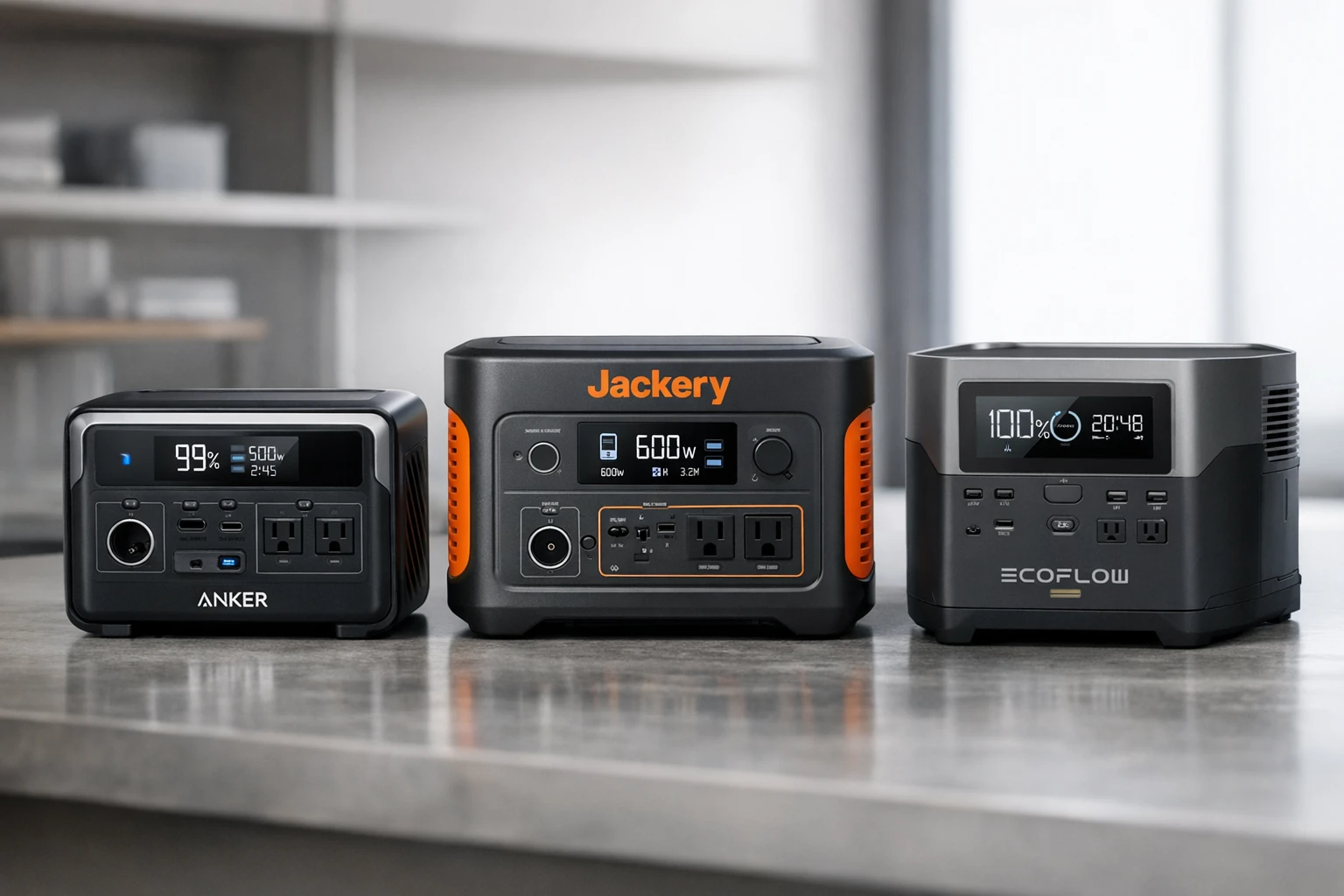
The portable power market has expanded rapidly, offering solutions that range from compact phone chargers to full‑size solar generators. Selecting the right unit requires careful analysis of capacity, output power, recharge speed, and real‑world reliability. This article compares five highly rated Amazon listings – Anker SOLIX C300, Jackery Explorer 300, Jackery Solar Generator 1000 v2, Anker 521 Portable Power Station, and EcoFlow DELTA 2. The comparison focuses on price, specifications, customer sentiment, performance, and ideal use cases, providing a balanced guide for outdoor enthusiasts, emergency‑preparers, and mobile professionals.
Individual Product Overviews
Anker SOLIX C300
The SOLIX C300 delivers 300 W continuous output and a 288 Wh LiFePO4 battery. It features two 140 W USB‑C ports, a 120 W car socket, and a total of seven charging ports. Fast recharge to 80 % in one hour is possible via dual PD 3.1 USB‑C inputs. Included is a 60 W solar panel, although compatibility is limited to Anker‑branded panels. Reviewers praise its lightweight design, fast charging, and robust app that displays real‑time wattage. One user noted, “It charged my phone and iPad very fast and still had a lot of charge left!” The unit ships with a three‑year warranty.
Jackery Explorer 300
The Explorer 300 houses a 293 Wh lithium‑ion battery and provides 300 W continuous AC output through two pure sine wave outlets. It includes a 60 W PD USB‑C port, a QC 3.0 fast‑charge USB‑A, and a 12 V car outlet. Recharging to 80 % takes roughly two hours using the wall outlet and the USB‑C port simultaneously. The unit weighs only 7.1 lb, making it highly portable. Reviewers highlight its simplicity and reliability during power outages, with one stating, “It kept my mother’s lights on and devices charged until power was restored.” A two‑year warranty backs the product.
Jackery Solar Generator 1000 v2
The 1000 v2 is a larger system offering 1,070 Wh capacity, 1,500 W continuous AC output and a 3,000 W surge capability. It includes a 200 W solar panel (sold separately) and supports fast 1‑hour emergency charging via the Jackery app. The LiFePO4 battery promises over 4,000 cycles and a ten‑year lifespan. Users appreciate its quiet operation (≈30 dB) and versatile ports, noting, “I could run my Starlink, iPad and multiple phones overnight without any issues.” The unit weighs 23.8 lb and carries a five‑year warranty.
Anker 521 Portable Power Station
The 521 model provides 256 Wh of LiFePO4 storage and a peak output of 600 W, thanks to SurgePower technology. It offers six ports: two AC, two USB‑A, one USB‑C, and a 12 V car outlet. Fast charging is enabled through a 65 W USB‑C input. Reviewers commend its durability and ability to run a 12 V refrigerator for over 20 hours, as one user reported. The device includes a built‑in LED light and a five‑year warranty.
EcoFlow DELTA 2
The DELTA 2 features a 1,024 Wh LiFePO4 battery with 1,800 W continuous and 2,700 W surge output. It supports 7‑times faster AC charging (0‑80 % in 50 min) and up to 500 W solar input. Fifteen outlets cover a broad range of devices. Reviewers emphasize its rapid charging and robust inverter, with one comment, “I can charge from 0 % to 100 % in about 80 minutes.” The unit includes a five‑year warranty and an optional expandable battery system.
Head‑to‑Head Comparison
Price and Value
Pricing ranges from $189 for the Jackery Explorer 300 to $699 for the Jackery 1000 v2. The Anker SOLIX C300 sits at $249.99, offering a larger capacity (288 Wh) than the Explorer 300 for a modest premium. The Anker 521 is $203.99, delivering 256 Wh and a 600 W peak, representing strong value for users needing higher surge power. EcoFlow DELTA 2, at $449, provides the highest capacity and fastest charging, justifying its mid‑range price. Overall, value is closely tied to capacity and output requirements.
Features and Specifications
| Anker SOLIX C300 | Jackery Explorer 300 | Jackery 1000 v2 | Anker 521 | EcoFlow DELTA 2 | |
|---|---|---|---|---|---|
| Price | $249.99 | $189.00 | $699.00 | $203.99 | $449.00 |
| Capacity (Wh) | 288 | 293 | 1070 | 256 | 1024 |
| Continuous Output (W) | 300 | 300 | 1500 | 600 (peak 600) | 1800 |
| Surge Peak (W) | 300 | 300 | 3000 | 600 | 2700 |
| Solar Input (W) | 60 (included) | 100 (Jackery SolarSaga optional) | 200 (included) | — | 500 |
| Battery Type | LiFePO4 | Lithium‑ion | LiFePO4 | LiFePO4 | LiFePO4 |
| Weight (lb) | ≈12 | 7.1 | 23.8 | ≈12 | ≈30 |
| Warranty | 3 years | 2 years | 5 years | 5 years | 5 years |
Customer Ratings and Feedback
All five units hold strong Amazon ratings above 4.4 stars. The SOLIX C300 has 4.5/5 from 2,283 reviews, with users highlighting its fast USB‑C charging and useful monitoring app. The Explorer 300 scores 4.6/5 from 10,952 reviews, praised for reliability during outages. The 1000 v2 enjoys a 4.7/5 rating from 4,460 reviewers, noted for quiet operation and high surge capacity. The Anker 521 receives 4.4/5 from 3,014 reviews, with particular commendation for its ability to run a 12 V refrigerator for extended periods. EcoFlow DELTA 2 also holds 4.7/5 from 7,627 reviews, with customers emphasizing rapid AC charging and solid build quality.
Performance and Reliability
Real‑world tests reveal that the SOLIX C300 can run a dual‑zone fridge for up to 23 hours in eco mode, while the Anker 521 keeps the same fridge operational for over 20 hours in mixed usage. The Explorer 300 reliably powers smartphones, laptops, and small fans for a full day, but its 293 Wh capacity limits heavy‑load scenarios. The Jackery 1000 v2 handles a 1,500 W AC load for short bursts and maintains low noise levels, making it suitable for indoor camping. EcoFlow DELTA 2’s 1,800 W inverter and 2,700 W surge allow it to run a microwave and electric kettle simultaneously, and its 0‑80 % charge in 50 minutes ensures minimal downtime.
Best Use Cases
- Lightweight emergency backup – Jackery Explorer 300
- High‑capacity off‑grid camping – Jackery Solar Generator 1000 v2
- Vehicle‑mounted refrigeration – Anker 521 Portable Power Station
- Fast‑recharging home backup – EcoFlow DELTA 2
- Balanced power‑to‑weight for travel – Anker SOLIX C300
Pros & Cons
Anker SOLIX C300
- Pros: 288 Wh LiFePO4 battery, dual 140 W USB‑C fast charge, compact 30 % smaller design, included 60 W solar panel.
- Cons: Limited compatibility with non‑Anker solar panels, some users note the app lacks a power‑graph feature.
Jackery Explorer 300
- Pros: Very lightweight (7.1 lb), pure sine wave AC outlets, fast 2‑hour 80 % recharge, robust two‑year warranty.
- Cons: No USB‑C input (output‑only), limited to six simultaneous device connections, no built‑in light.
Jackery Solar Generator 1000 v2
- Pros: Highest capacity (1,070 Wh), 3,000 W surge, quiet operation, fast 1‑hour emergency charge, five‑year warranty.
- Cons: Heavier (23.8 lb), solar panel sold separately, higher price point.
Anker 521 Portable Power Station
- Pros: 600 W peak output, durable LiFePO4 cells, six versatile ports, built‑in LED light, five‑year warranty.
- Cons: No 3‑prong AC outlets, charging issues reported when using multiple inputs simultaneously, weight comparable to larger units.
EcoFlow DELTA 2
- Pros: 1,800 W continuous output, 0‑80 % charge in 50 min, expandable battery system, 15 ports, five‑year warranty.
- Cons: Heavier than the Explorer 300, premium price, solar input limited to 500 W.
Recommendations by Use Case
For hikers and backpackers who prioritize weight, the Jackery Explorer 300 offers sufficient power for phones, lights, and a small laptop while remaining under 8 lb. For overland travelers needing to run a 12 V refrigerator or power tools, the Anker 521 Portable Power Station provides the necessary surge capacity and long runtime. Users who require a full‑size backup for home appliances should consider the EcoFlow DELTA 2 because of its high inverter rating and rapid charging. For large‑scale camping or van‑life setups where solar recharging is essential, the Jackery Solar Generator 1000 v2 delivers the most energy storage and the ability to handle high‑wattage devices such as portable AC units. Finally, the Anker SOLIX C300 strikes a balance between capacity, fast USB‑C charging, and a modest footprint, making it ideal for weekend trips that include both electronics and modest appliances.
FAQ
- Can these power stations be used with any solar panel? The SOLIX C300 only accepts Anker‑branded panels. Jackery units require compatible SolarSaga panels for optimal MPPT performance. The EcoFlow DELTA 2 accepts up to 500 W of generic solar input, while the 1000 v2 works with the included 200 W panel or any panel up to that rating.
- How long does it take to fully charge each unit from a wall outlet? SOLIX C300 reaches 80 % in one hour via dual PD 3.1 ports. Explorer 300 needs about two hours for 80 % using simultaneous AC and USB‑C input. The 1000 v2 can charge from 0 % to 100 % in roughly 1.7 hours (fast‑charge mode) or one hour in emergency mode. Anker 521 charges in about an hour with a 65 W USB‑C charger. EcoFlow DELTA 2 achieves 0‑80 % in 50 minutes and full charge in 80 minutes.
- Are these units safe for indoor use? All models feature pure sine wave inverters and built‑in battery management systems that protect against over‑temperature, over‑current, and short‑circuit conditions. The 1000 v2 is noted for its quiet operation (≈30 dB), making it suitable for indoor camping.
- Which unit offers the longest battery lifespan? LiFePO4 chemistry, present in SOLIX C300, 1000 v2, 521, and DELTA 2, typically delivers over 3,000‑4,000 charge cycles. EcoFlow advertises a 10‑year lifespan with over 3,000 cycles, while Jackery’s lithium‑ion cells have a shorter cycle count but are still reliable for typical consumer use.
- Can I charge a power station while it is powering devices? Yes. The SOLIX C300, Explorer 300, 1000 v2, and DELTA 2 support pass‑through charging, allowing simultaneous input and output. The Anker 521 also permits pass‑through, though users reported occasional voltage sag when using multiple inputs.
- Do any of these units include a built‑in flashlight? The SOLIX C300 and Anker 521 both feature an integrated LED light with adjustable brightness. The Jackery models do not include a built‑in light, while EcoFlow DELTA 2 provides an external LED lamp accessory.
- What warranty coverage do these products have? Anker SOLIX C300 offers three years, Jackery Explorer 300 provides two years, Jackery 1000 v2, Anker 521, and EcoFlow DELTA 2 each include a five‑year warranty, reflecting confidence in durability.
Conclusion
Each power station excels in a specific niche. The Jackery Explorer 300 is the most portable and budget‑friendly option for everyday emergencies. The Anker SOLIX C300 offers a balanced mix of capacity, fast USB‑C charging, and a modest solar panel, making it ideal for short trips. For heavy‑duty off‑grid living, the Jackery Solar Generator 1000 v2 provides the highest energy storage and surge capability. The Anker 521 stands out for vehicle‑based refrigeration and tool charging. Finally, the EcoFlow DELTA 2 delivers rapid charging, expandable capacity, and a powerful inverter, making it the best all‑rounder for home backup and high‑load camping. Prospective buyers should match their power needs, weight tolerance, and budget against these strengths to select the optimal solution.
Products Mentioned in This Review
Frequently Asked Questions
What are the main differences between the Anker SOLIX C300 and the Jackery Explorer 300?
The SOLIX C300 offers a slightly higher wattage output and faster USB‑C charging, while the Explorer 300 provides a larger battery capacity and more AC outlets.
How quickly can the EcoFlow DELTA 2 be recharged with solar panels?
Using a compatible 200‑W solar panel, the DELTA 2 can reach a full charge in about 3–4 hours under optimal sunlight.
Which portable power station is suitable for running an air fryer off‑grid?
The Jackery Solar Generator 1000 v2 provides enough continuous AC power (up to 1000 W) to safely operate most 120 V air fryers for short periods.
Are the Jackery Solar Generator 1000 v2 and other models compatible with standard household AC outlets?
Yes, they include standard 120 V AC outlets that accept typical plugs, allowing you to power regular appliances directly.
What should I consider when picking a portable power station for emergency preparedness?
Focus on battery capacity, multiple output types, recharge options (solar, wall, car), and reliability ratings from real‑world user reviews.